
‘Nora Highland’ Addresses the LGBTQ Casting Problem


Actor and producer Ryan Spahn set out to address the LGBTQ casting problem that is still plaguing Hollywood in his masterful and stunning film, Nora Highland.
Originally set to be an off-Broadway production, Nora Highland had its first read in June 2019 at the New York Pride Plays festival. After COVID-19 struck and shut down the entire theatre community in March 2020, Spahn found himself looking for new outlets to express his creativity and release his beloved project into the world. Using extreme social distancing measures and shooting via Zoom while in quarantine, he directed an hour-long movie version of Nora Highland, which made its premiere at the NewFest LGBTQ Film Festival.
The film plays out in three distinct portions while following the casting process of a notable gay character in an upcoming Broadway revival and explores the phenomenon of straight performers being lauded for their work portraying queer roles. The next time audiences can watch Nora Highland will be this weekend, Feb. 26-27, during the DC Reel Affirmations Film Festival.
Spahn took some time to chat with OFM more about the film, what led him to create this project, some of his personal casting setbacks, and how he and his partner, actor Michael Urie, have been raising money to help their fellow performers during these dark times of COVID.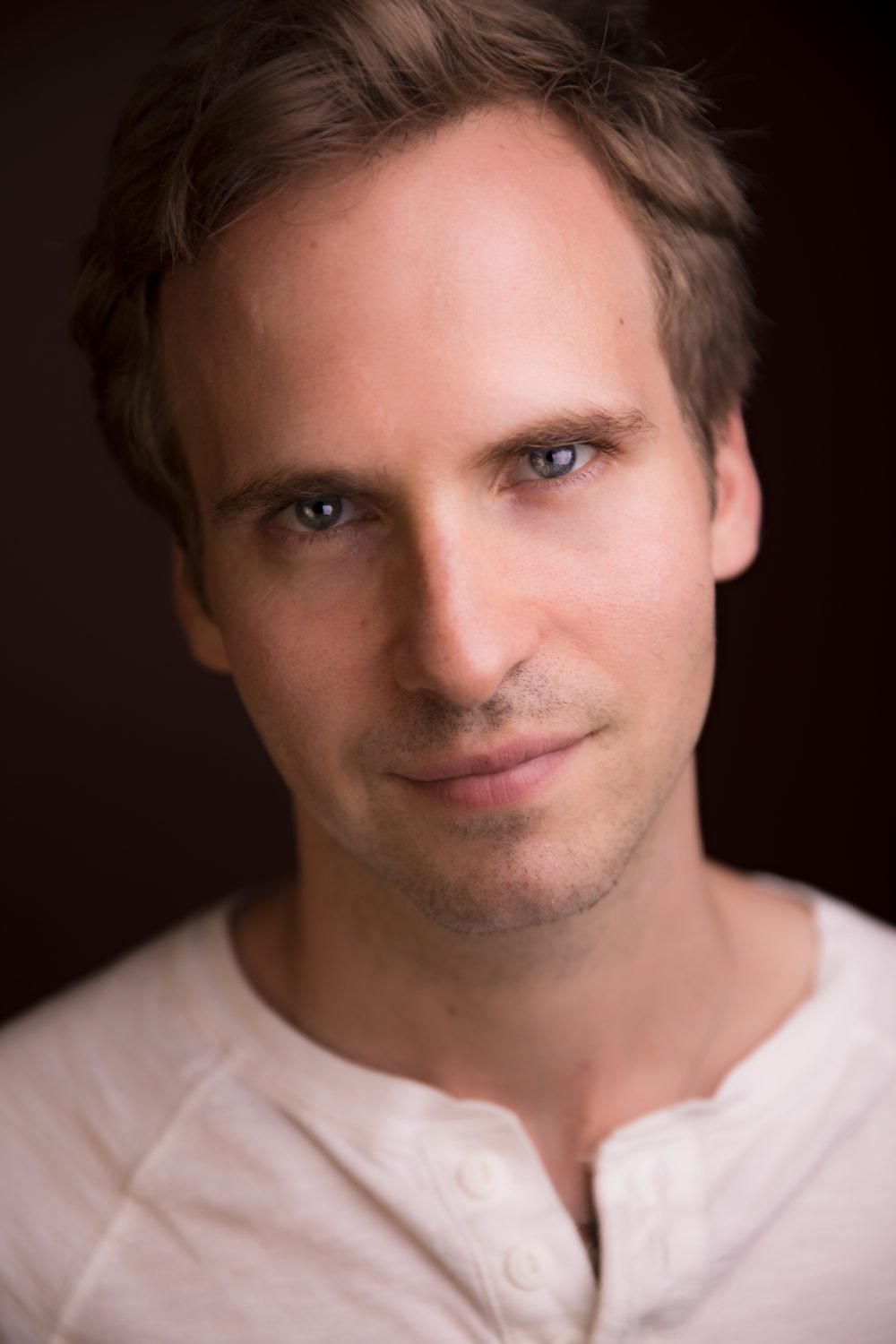 Hi, Ryan! Thank you for taking some time to chat with me about your film, Nora Highland. Can you begin by telling us what inspired you to create this project?
I am an actor, and I have been in a lot of situations where there have been either very clear or thinly veiled homophobic actions during auditions. I have grown increasingly frustrated with it because it is such a hard thing to discuss because you cannot pinpoint homophobia and casting. You cannot ask someone how they identify, but you can assume a lot and make judgments based on what you know of somebody.
Within my community, it has become something that we talk about a lot, and I felt like it was a very important subject to start addressing. Originally, I wrote this as a play, and then it was a part of Pride Plays in New York City in 2019. During the pandemic, we did an online fundraiser reading for Play-PerView, and I saw that it really worked in the video conferencing medium. So, I adapted the play to fit that and shot it in the first couple weeks of the pandemic.
Yes, I heard that this was originally an off-Broadway production. How challenging was it to film and produce Nora Highland via Zoom while on COVID lockdown?
It was hard! There are six, seven people in the film, and most of them have never met in person. We had to rehearse everything on Zoom and sort of choreograph. There is a section of the film that is like a 35-minute scene that is unedited, and we shot it in one take. We rehearsed it for probably two weeks. Those actors had never met in person, but they are supposed to be old friends. So, we had to really spend time with them because they are both big New York theatre actors.
They have it in their bones to rehearse a scene for two weeks, block it, figure it all out, and then record it when it was time to roll. They were ready to go, and I think this was also something very inspiring for us to work on during the time when we had no idea what the pandemic was going to look like. We had no clue when it would be over—we had no information yet—so the loss that we were feeling as all theatres shut down, this really fed us because we could rehearse it like we were in rehearsal for a stage show.
Nora Highland made its debut premiere at the NewFest LGBTQ Film Festival. How was it received?
Very well. The Gold Derby picked us as one of the top five films of the festival, and I was just so blown away with how many people were taken by it. Not only the way we shot it, but the understand how clear and important the subject matter is. You look at things like the controversy with James Corden in The Prom, or films like Ammonite and Supernova, all these films are being lauded for these straight actors playing queer characters. It really hurts people.
Someone once said this to me, and I really agree with them, ‘Queer people are saying it hurts us to see ourselves not involved in these stories and straight people are not saying it hurts them to see queer people in their stories.’ The few times that a queer person can step into a straight person’s role, it does not hurt straight people, but it hurts us. Obviously, something is not right. Something is not even, and it is because it is not balanced. Until it is balanced, it is not going to be something that people can just brush off as saying the best person got the job. There is a deep, deep imbalance.
Related Article: ‘Breaking Fast’ Breaks Down Barrier for Muslim Queer Stories
The film will stream next during Washington D.C.’s Reel Affirmations Film Festival?
That is the next thing. As of right now, it is sort of making its way through the film festival circuit. NewFest is towards the end of the year, so now we are at the top of the year with getting into any other festivals taking films that are not world premieres. We are in the process of figuring out all the scheduling for that.
What do you hope audiences take away from Nora Highland?
I want people to hold themselves accountable to the decision they make. The people in power. There is a lot of arguments around, like the best person got the job. Quite often, the best person is never allowed into the room because the best person is the person who has the most opportunity. Therefore, the person who is the best may be the best at auditions, the best person doing interviews, the best person who met with a director or knew a director. Those people are usually the ones who are going to have the most opportunity all the time.
If you look at a TV show like Pose, within the first couple episodes, you see actors who normally do not have the kind of opportunity or the size of a role that the people in Pose are having. You do not see a 100 percent consistent acting style, but then as it moves on through the season to season two, the people who are not given the opportunity become extraordinary because they are practicing, learning, and getting these chances that so many other people get so much of. When you first meet the people who have all the opportunity, they are going to read better than the people who have less opportunity.
Therefore, you can always hold the argument, I’ve picked the best person for the job, but that is only because the same demographic of people are getting all of the opportunity. They are just going to be better when you first meet them, and I think the people in power need to be aware of that and hold themselves accountable. If they can’t, then they need to hire people around them who will hold them accountable.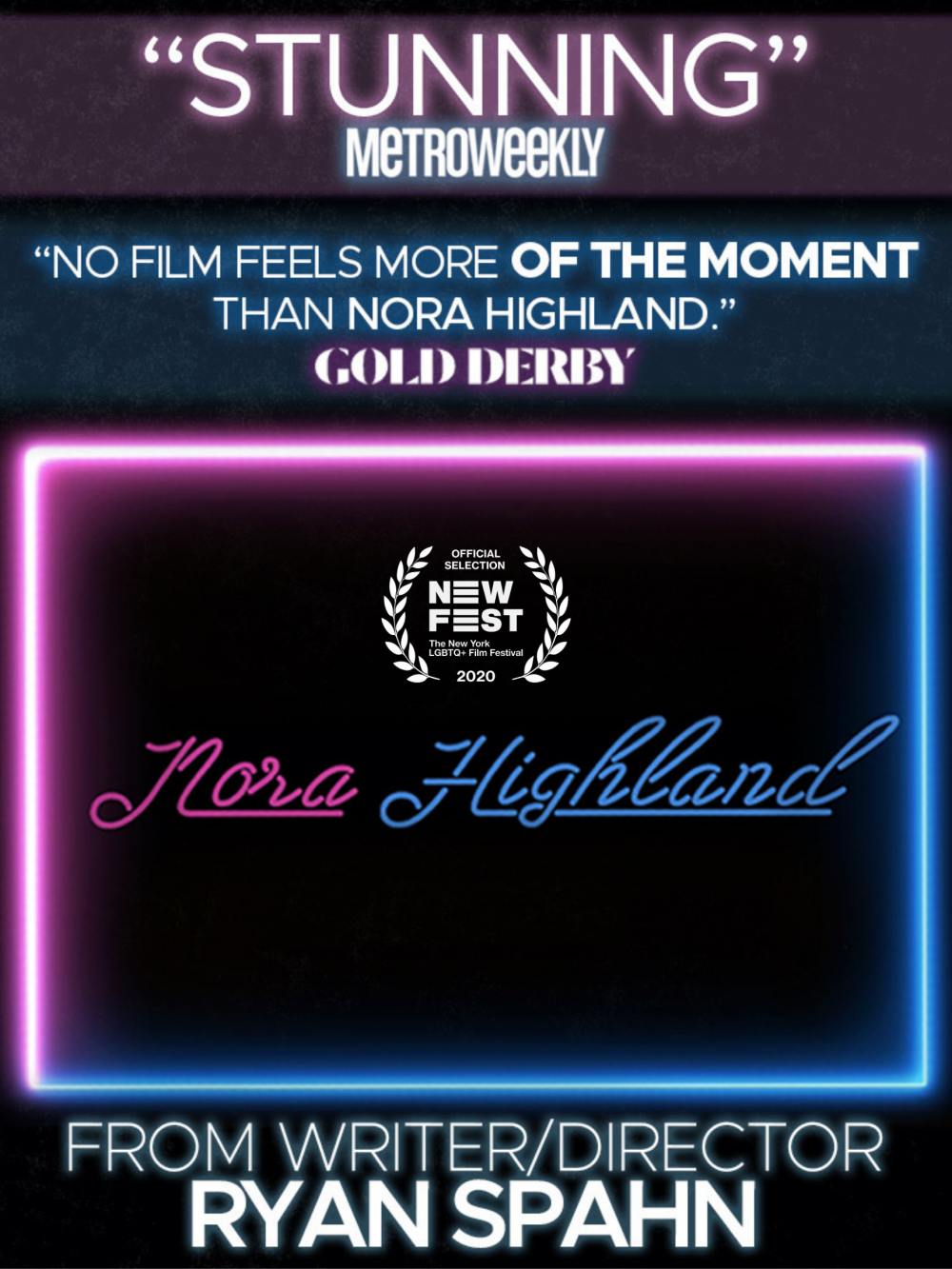 Why do you think there is such a huge LGBTQ casting problem in the entertainment industry? This has always been an issue, but over the last couple years, it has been coming to light. Why do you think it is still happening?
I talk about that a lot in the film, and I think a big part of it is centered around what people feel is attractive. I think sexuality is a spectrum, but I think a lot of attention has been given to the Ken and Barbie dolls as being the most prime example of what everyone is attracted to. If somebody does not fit one of those prototypes, they are just not going to excite 20 people who have to make a decision about who is right or wrong for the role.
Twenty people can all agree on the kind of person that everyone has sort of decided is the most attractive type, and I think sex appeal is a huge part of it. I think queer people are decidedly considered less appealing sexually than straight people. That is a huge part of it. There are a lot of people to blame for this fantasy, but I point my finger to a lot of older gay men in power. I think there is a fantasy around straight men who maybe might have a night where they are not so straight. There is a fantasy in there, and I think people cast and produce films based on that fantasy. That fantasy is not helping anyone.
Just to clarify, do you believe only queer people should play queer roles?
No, I don’t. I do believe that everyone should be able to do anything, but I think as of right now, that is just not the case. As an actor, I look at the auditions that I go on, and I have friends who are gay, friends who are straight, and friends who are everything in between. Predominately, anyone who is gay is going out for gay roles, and maybe one straight role. Straight people are going out for all the straight roles and probably all the roles you are going out for as well because they are just allowed to have more shots at getting it right. The Armie Hammers of the world are allowed 10 shots of being a movie star, and Zach Quinto gets one.
Related Article: Jeff Blue on New Book and Discovering Pure Talent
Can you talk about an incident you personally experienced?
I had a situation once where I went to a gay wedding with my partner, and I met a woman who I later found out was a high-power casting director. She was great. We hung out, and I did not know that was who she was, and it didn’t even matter. Then five to six months later, my manager tried to get me an appointment with her, and she said that I read too gay. She said I read too gay when she had never seen me act or auditioned me.
She was basing that opinion by meeting me with my partner at a wedding in which two men were getting married. That was also an email I was forwarded, so there is a paper trail. It was horrible. That was a horrible thing to say, whether or not it is true. I was not given an opportunity to prove that it was not right. It was assumed that I was would just be too gay.
I was also in a workshop production of a show that was moving to Broadway, and it was a very gay show. In the workshop, we did the final workshop performance for all the producers. All of us were pretty much gay people, and the feedback was that the production read too gay. It was too gay for a gay show, in which almost everyone in it is gay.
They ended up moving the casting to putting in a lot of people who identify as straight so that it could be more accessible to the everyday audience. If they can see a straight person and know that the person is going to go home and sleep with their wife, they can stomach watching a gay story. If they have to watch people that they know are gay doing things that are gay onstage in front of them, it then becomes a queer film pushes it aside to something that is not relatable.
Since Nora Highland has been such a success, do you plan to do more virtual work?
I am part of a lot of virtual theatre stuff, and I am also in a television show called The Second Wave, which is a new show made by the people who made The Good Fight. It has been shot entirely remotely, so I receive a set up with cameras, and then from where the production team is, they control it like robots. They control what is being filmed. I have shot three episodes of that, and it is a six-episode series that is going to be almost entirely a remotely shot television show. You and your partner, Michael Urie, have been helping raise money for unemployed actors impacted by the New York theatre shutdown. Can you tell us more about that?
We have done a lot of fundraisers for Broadway Cares/Equity Fights AIDS, which helps The Actors Fund, which helps provide money and resources for people who are deeply unemployed because of the shutdown of the entire community. Some things that we have done, Michael did a one man show where he plays an actor who works in Barbara Streisand’s basement. He ran that show, Buyer and Cellar, for like 700 performances over a period of years, and we produced a live performance of it in our apartment. We had multiple cameras set up, and we raised at least $85,000 for The Actors Fund.
Basically, every theatre is doing an event, and then a giant portion of the proceeds goes to The Actors Fund because everyone is still unemployed right now. People are just trying to help however they can. Play-PerView, which is the website that I did the first reading of Nora Highland on, was a fundraiser. Michael and Tessa Thompson played the two characters. The play itself is different from the film. The play is two actors playing all the roles all the way through. So, Michael played all the male roles and Tess played all the female roles. That was a fundraiser for Broadway Cares.
What more do you hope to accomplish with your platform?
I just want to raise awareness and start conversations around things that matter to me. It becomes so overwhelming how far we have to go with so many things, and you can sometimes become paralyzed with the overwhelming thought of trying to change anything. All I feel like you can try to do is do the most you can in the world you live in, the circle you live in, and introduce elements, conversations, and positions that matter to you to people who do not really understand it.
For instance, with Nora Highland, so many of my close friends will watch or read it and say, they had no idea this was even an issue. It had never crossed their mind because there was no need for it to cross their mind, which is fine, but it is an issue. It is an issue that people are not being challenged to have to address because there is no proof that it is happening. You can’t find the thread to prove it, and I think that it is important for people to being holding themselves accountable to their decisions.
Before we wrap up, are there any other upcoming projects or anything else you would like to mention or plug?
I really want people to follow Nora Highland on Instagram, and make sure you check it out at some point, because it such an important and education film. I think it has been very inspiring for people, and I get a lot of people who I do not know reaching out to me saying they have seen it and saying, ‘Finally! We are talking about something that has been driving people crazy for years and years.’ They feel I have found a way to dramatize it in a way that is accessible to people who do not understand what it is that we are talking about and the frustrations we are experiencing.
To stay up-to-date with Spahn, follow him on Twitter and Instagram. Make sure to follow Nora Highland’s official Instagram account, and click here to purchase your $10 ticket for the upcoming screening, which will also include a pre-recorded Q&A with Spahn and the film’s cast members.
Photos Courtesy of Thomas Brunot and Curtis Brown
What's Your Reaction?

