


I Was Trying To Focus On Crafting Better Songs: A Conversation With Brendan Wright (Tiberius)

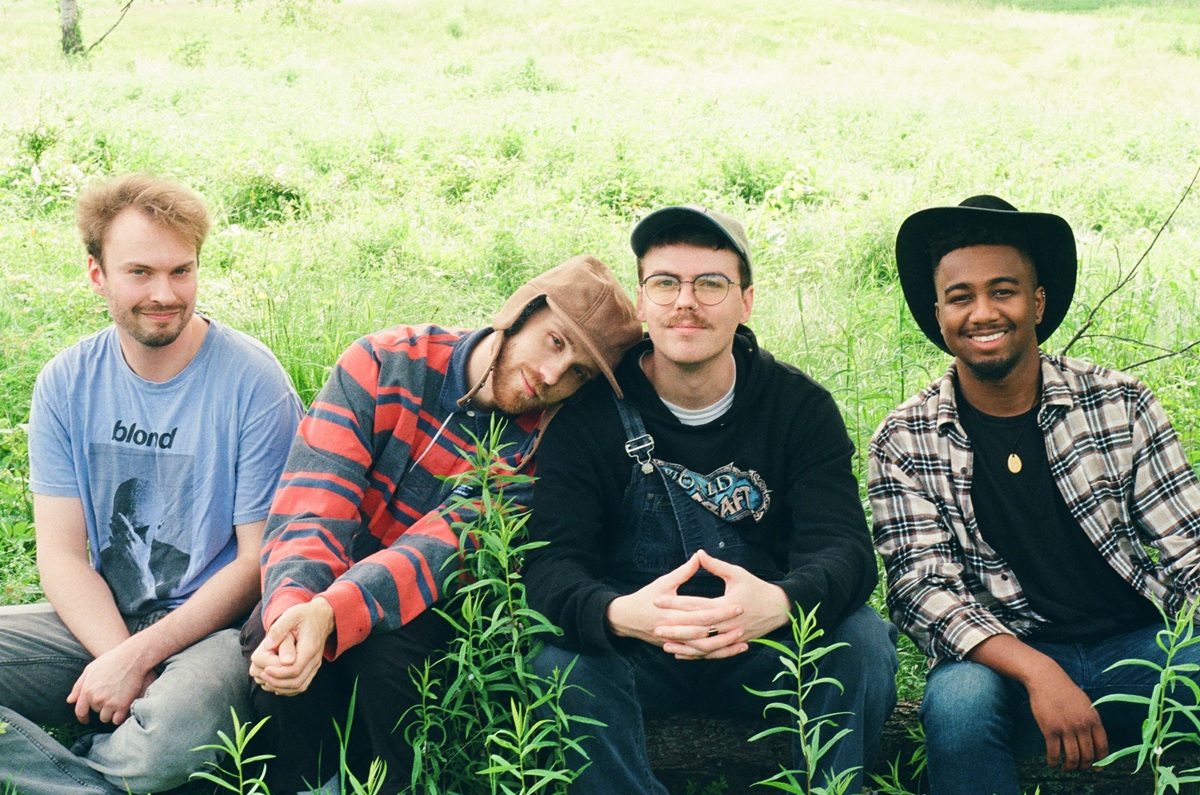

If you are a fan of country and emo, then Tiberius is the band for you. The band, which described their sound as farm emo, is set to release a new album this year titled Troubadour. Troubadour is an emotionally vulnerable genre-bending record that delivers just the right amount of angst and twang.
OFM chats with band member Brendan Wright (they/them) about the upcoming Tiberius record, Troubadour.
The Creative Process of Troubadour
“I’ve done a lot of different records, and some records have been overly emotional and overly confessional to a point that I think they really weren’t good records because I just took the confessional and emotional element too far,” says Wright. “I was trying to focus on crafting better songs. I think Troubadour is a record that feels very emotional and vulnerable. I was really trying to be cognizant of writing songs that stood on their own. But I also think it’s a really vulnerable record. I think that it was a really good opportunity for me to just focus on developing a good relationship between those two, and I think it was also a really good opportunity for me to trust some other people to step in and help me work on it.”
The recording process for Troubadour differed significantly from previous records. “Usually, the process starts with working things out in a live arrangement, and then I’ll usually go home and try to make a demo,” says Wright. “Sometimes it’ll be like I’ll play all of the parts for that and bring it back to the band. Eventually, we’ll have a rough idea of where everything is going to be. Then we’ll go to the more proper recording process. In the past, I used to do all of that at home. This time, we actually recorded the drums in a more proper studio with my friend Nate Scaringi. Nate did an excellent job of creating some higher-quality drum recordings that I could then go home and build everything off of. Before, I would try to record the drums at home. That process takes a really long time ‘cause my engineering skills there’s definitely room for improvement. I described it in the past; it felt like I was trying to make an omelet and also trying to make the plate at the same time. This time it was like someone gave me a really nice plate that I could then make the omelet on top of.”
Working Collaboratively
Initially, Tiberius was a solo project, and it was an opportunity for Wright to write and record music on their own. Near the end of college, that changed, and Tiberius started to become a bit of a band. “A friend of mine, towards the end of my college career, was like, ‘How would it feel like playing some of these songs as a band?’” explains Wright. Wright really enjoyed working collaboratively with other people. “When I moved to Boston, the plan was to keep working as a band and maybe make a collaborative record. Then, the pandemic hit, and I ended up doing another record all by myself. That was the Lull record, and that was really great. But then I brought those songs to a group of musicians, and I realized how much more those songs can be elevated with working with other people. I guess Tiberius has always been I have been the person directing it and really driving the ship, but at this point, it’s a lot of collaboration with my pals. There’s been a bunch of different musicians who’ve come in and out of it—I feel like it’s a big family, so even though I’m not playing with everyone right now, they all exist in the Tiberius universe or family.”
One such example of the Tiberius universe is “Redwood,” which sees many of Wright’s friends helping out. “I was really lucky to have my friend Julia Perry, who sings and writes for her band Exit 18,” comments Wright. “She has an awesome, awesome voice and such an expressive voice. She did a lot of harmonies on ‘Redwood’ and has that Paramore vibe, and thought she would be perfect to help round that song out. Another one of my friends, Nicholas Zabit, did some ambient saxophone at the end through that too.”
Ego Death, Heartache, and Feeling Frustrated
At the time of creating Troubadour, Wright was experiencing ego death. “My therapist and I talk about it all the time about how a lot of my anxiety comes with thinking about myself in relation to the other, and the other can be a group of people, a friend, a relationship, or in abstract terms, thinking about people as a universal they,” they comment. “I had fallen into a nice community and nice rhythm where I was living in Boston, and a lot of that seemed to change. Some people were moving away. I had been in a relationship for a long time, and it had ended. I was just figuring out who I was. I think I really did lean on other factors that were out of my control to really define my identity. There was a point where I was feeling really low around that, and I really had to slow down and think about who I was.”
Working on Troubadour really helped Wright recapture their identity. “I think Troubadour really helped ground me, like a therapeutic exercise,” they say. “It’s a practice, and I think it’s something we all have to come back to because life continues to move on and there’s always new factors and variables. I imagine I’ll go through another period of that at some point soon, as I think we all do.”
The inspiration for “Painting Of A Tree” came from an older gentleman with whom Wright works with. Wright was experiencing some painful heartache and asked him if he had any advice to give. “He said ‘An artist cannot paint a tree unless they examine all aspects of it.,'” says Wright. “It was for me really just being observant of what’s around you and having to sit with all the bad but all the good and really trying to take a neutral observation of it. When you’re removed from it, it’s actually a really human experience. There’s something really comforting to me about how there’s always gonna be times of turbulence, but it just means you’re alive. And I really appreciated that. It was just a reminder of here’s where you are, and it’s just a part of life, and it will always be a part of life. It was just this feeling of peace with it.”
“Felt” was written while Tiberius started to date again. “It was my like associative thoughts about how I was going out, and rather than taking time to really sit with these complex feelings that I was having, it was a way to distract myself by going on a lot of dates,” they share. “It’s really easy just to keep distracting ourselves. People use the TV or media to distract themselves. People use other people or other relationships to distract themselves. I was really feeling frustrated musically at the time, and feeling frustrated with my life, and ended up going on a series of short-lived dates with some different people.
I was writing a little bit about some of those experiences, how I was feeling, and some of the stories that I was coming away with from those interactions. I don’t want to make a reduction out of those experiences. They were all great interactions. They were all great dates. It was really nice to meet all those people. But sometimes it feels like when you meet somebody once or twice, it almost feels like you’re tuning into a TV show. You get to go and live in someone else’s life for a night, and then that’s it. It ends there. You never really talk to them again, and they just become a story. Contemplating on that experience and also sitting with the fact that it’s fun, but you’re gonna go home and you’re still gonna be alone and you’re gonna have all the problems you’re gonna have. It’s gonna get better, but right now it’s not.”
Drawing From a Wide Range of Genres and Playing With Dynamics
Troubadour incorporates many genres into the mix, including country, emo, folk, grunge, indie rock, pop-punk, shoegaze, and singer-songwriter. One example is “Sag,” which takes the listener on a sonic journey with its vibrant style. “I love trying to utilize all of the different styles that I really like,” comments Wright. “I can’t help myself when it comes to throwing in noise. When I start writing a folk song, by the end of it, there’s always some loud and noisy part. I like offering a lot of contrast in my music and having parts that feel really different, sometimes even within the same song. I really value dynamics. Sometimes it’s really cool to really emphasize dynamics by having parts that are really quiet and bare bones, then adding every instrument I can think of or have use of in my musical palette all at once. As a result, things get very thick.”
In “Tag,” the contrast and dynamics that Wright talks about are heavily in play. “It’s funny actually, I was listening to a lot of Brazilian Tropicalia music at the time when I wrote it on a classical guitar, and it was totally not gonna be that style,” they state. Drummer Ben Curell was a significant influence on the song’s eventual musical direction. “Ben and I have this interesting relationship where he’s such a gifted and hardworking musician, and we went to college together, and I looked at him as this north star for drummers. We didn’t start playing together until after college. I think I still really look up to him. Usually, when I show him an idea, he’ll be like, ‘I’m gonna do this drum beat with it.’ Even if it’s something I totally didn’t imagine, I’m like, ‘I’m just gonna go with this’ because I trust him a lot. He had come up with this drumbeat. I think the guitar came off of that. I really liked this clangy verse; it just came to be. The loud, distorted parts that would sneak into there just came as trying to add some contrast in there—It was really finished when I was recording the record and trying to add different textures, so I really tried to emphasize the clangy verses and these more fleshed out pre-chorus and chorus.”
“Redwood” started with Wright experimenting with different guitar tunings on a classical guitar they had. “It’s kind of this offshoot of like an open D tuning, and I was playing around doing a fingerpicking pattern that ended up being the verse,” they recall. “I didn’t have a melody for it, and it was just like ‘this is very moody.’ It reminded me a lot of the song ‘Decode’ by Paramore when I first did it, kind of the late 2000s pop punk emo thing. I tucked it away, and I ended up revisiting it. I was like ‘I am just gonna lean into this’ and ended up putting on my distortion and fuzz pedals, and tried to make a really loud chorus, and then a soft verse.
I really wanted it to sound like you were walking through the woods, and you were having one of those moments to yourself. The second half of the song, where it gets really ambient, is actually the first demo that I made for ‘Redwood.’ I ended up incorporating it, adding other layers, and trying to make it ambient. I couldn’t really decide what version I wanted to use, so I ended up just putting them together.”
Concluding Comments
Troubadour is set to drop on November 14. “At this point, to me, Troubadour feels just like a collection of stories,” reflects Wright. “When I perform them, sing them, and hear them now, they don’t really carry the same resonance for me as I wrote them, and that feels on par with everything that I’ve worked on ‘cause I’m pretty far removed from them. This record feels like it took a snapshot of where I was in this experience and how I was feeling years ago. Now I have this weird relationship with it because I don’t feel like most of those things anymore, and the personal associations I have with it and the things that inspired it are very far removed. It’s almost weird for me to go back and revisit them, and I’m happy that I made the record, but it feels a little strange.”
Be sure to follow Tiberius on Instagram to keep up to date with the latest announcements.
Photo courtesy of Tiberius

